18K, 21K, 22K or 24K: which gold should you choose?
The karat tells you how much of a piece is pure gold. Pure gold is 24 parts out of 24; the rest of a lower karat is other metals, added to make the gold harder and to change its colour a little.
The four karats at a glance
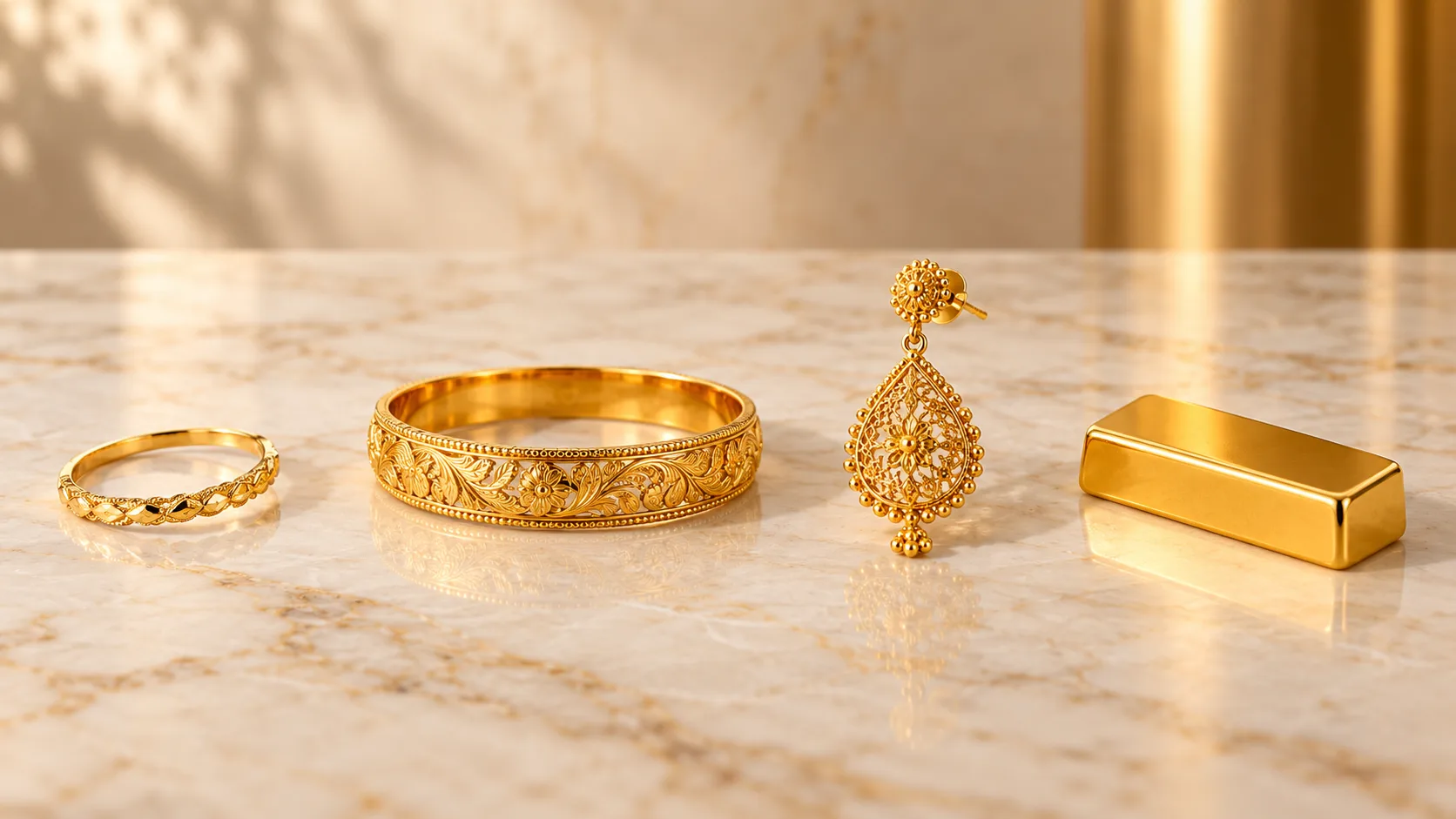
- 24K: about 99.9% gold. The deepest yellow, and the softest. Usually bought as bars and coins rather than worn.
- 22K: about 91.6% gold. A rich, deep yellow, soft enough to be worked into fine filigree. The classic choice for bridal and heavy traditional sets.
- 21K: about 87.5% gold. Warm yellow and a little harder than 22K. The everyday gold of the Gulf: bangles, chains and sets that are worn often.
- 18K: 75% gold. A lighter, brighter yellow and the hardest of the four, so it holds small settings and stones well. Common in modern and delicate pieces.
Colour
The more gold, the deeper and warmer the yellow. 24K and 22K look almost orange-gold next to 18K, which reads as a softer yellow. Neither is better; it is a matter of taste and of what the piece is worn with.
Strength and daily wear
Pure gold bends and scratches easily. A ring or bracelet worn every day lasts longer in 18K or 21K. Heavy necklaces and earrings, which take less knocking, are often made in 22K.
Price
Because a higher karat holds more gold, a gram of 22K costs more than a gram of 21K, and a gram of 21K more than a gram of 18K. In our shop every piece is priced from its own weight and today's rate for its karat, so you can compare two pieces fairly.
How to choose
- For everyday rings and bracelets: 18K or 21K.
- For bridal and traditional sets: 22K or 21K.
- For saving in gold: 24K bars and coins.
- For pieces set with stones: usually 18K.
If you are unsure, ask us on WhatsApp at +971567694427. We will tell you the karat and the weight of any piece before you buy.
Every piece is priced from its weight and today’s gold rate.
Shop gold