How to tell real gold: the stamp, the weight and the invoice
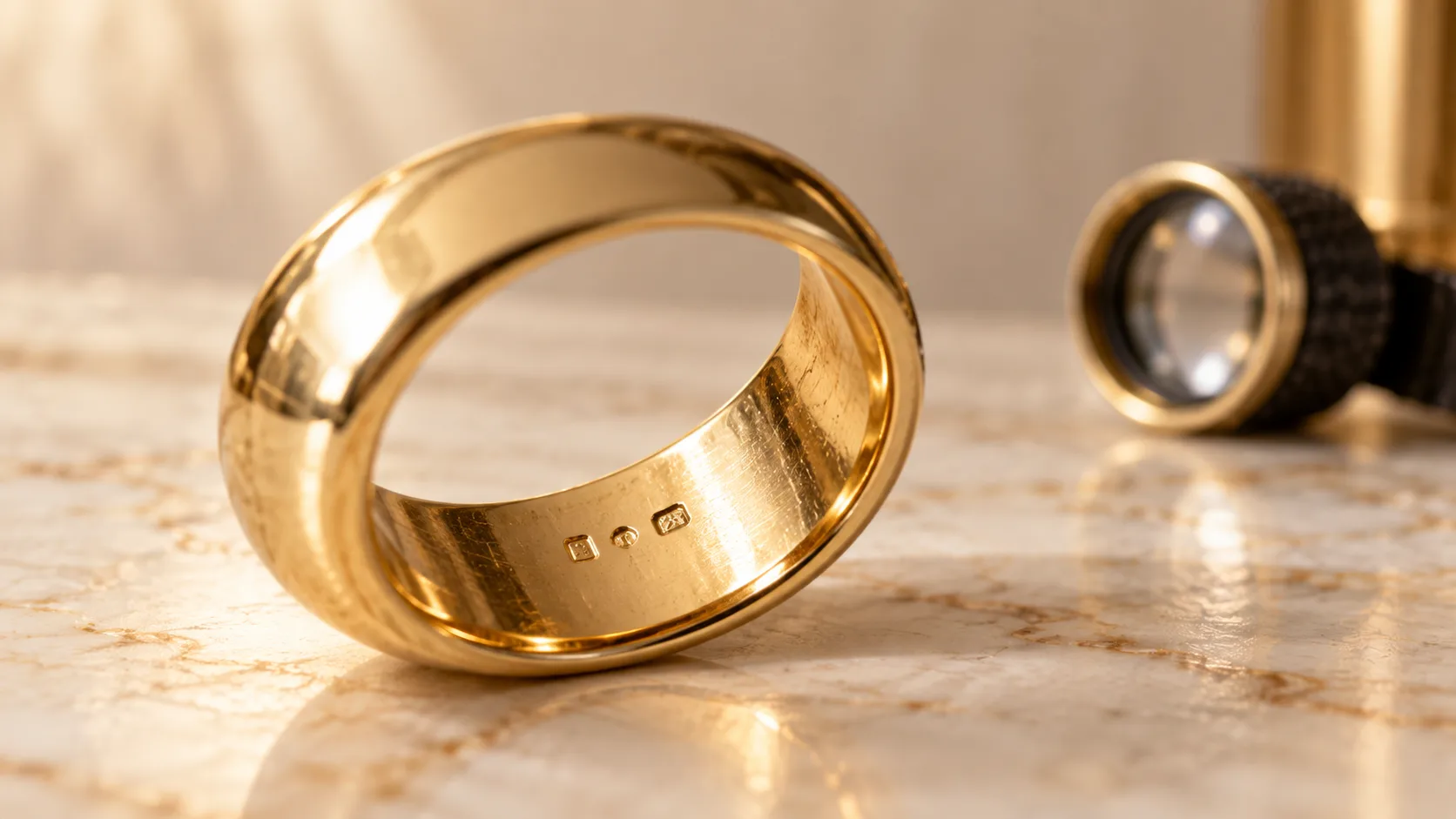
A gold piece should tell you three things before you pay for it: its karat, its weight and who sold it to you. If any of the three is missing, ask before you buy.
1. The purity stamp
Look inside a ring or bangle, or on the clasp of a chain. Gold is usually stamped with its purity, either as a karat or as parts per thousand:
- 750 or 18K: 18 karat
- 875 or 21K: 21 karat
- 916 or 22K: 22 karat
- 999 or 24K: 24 karat
A stamp is a good sign, not proof on its own: stamps can be copied. It matters most together with the next two.
2. The weight
Gold is priced by the gram, so the weight should be written down, not guessed. A trustworthy seller weighs the piece in front of you or states the weight on the invoice.
3. The invoice
Keep an invoice that names the seller, the karat, the weight and the price. It is what lets you resell the piece or return it later.
What about home tests?
You will read about magnets, vinegar, biting and scratching. A magnet can show that something is not gold, because gold is not magnetic, but a non-magnetic piece is not necessarily gold. Acid and scratch tests can damage the piece and are best left to a jeweller with the right equipment.
How we sell
Every piece in our shop is sold with its karat and its weight, priced from today's rate, and with an invoice from Misskim Jewels L.L.C. If you have a question about any piece, write to us on WhatsApp at +971567694427.
Every piece is priced from its weight and today’s gold rate.
Shop gold